Click on the link below to watch the video
https://goanimate.com/videos/0Ccc-0e1-Ros?utm_source=linkshare&utm_medium=linkshare&utm_campaign=usercontent
As we could see in the video, morphology help students to know how words are formed and structure, which is very important because pupils will acquire new strategies to guess the meaning of the words using their morphological knowledge.
Monday, November 23, 2015

Phonetics & phonology
As we could see phonetics and phonology is a subject that must be taught in school, due to, it help students to acquire an English level near to native and also because it provides them with knowledge about how to pronounce correctly the words.
The meaning of language
SEMANTICS

According to Fromkin,Rodman & Hyams (2011)Semantics is the branch that studies the meaning of words, expressions or sentences
As it is known one of the main purposes of language is to produce meaningful sentences.
It is important to know that there is literal and non literal meaning. As we can see in the next pícture
Another example could be the phrase " the door is behind you” may be literal answer for the question where is the door? Or might be non literal if it means it’s time for you to leave. Another thing that also influences meaning is the context and the tone of voice. For example, if someone says “what a good film” depending on the context and our tone of voice it could also have a sarcastic meaning that
the film was bad Clouston (1991).
 Teachers need to communicate students that words can have different meaning, therefore teachers can help students to develop not only skills to learn words from lists or from the dictionary, but also he / she has to help them to acquire the ability to infer other meanings from the words by making activities like reading or listening passages Clouston(1991)
Teachers thus need to teach similarities and differences that we found in common with our first language. However they also need to clarify that there are some words that may have similar form as Actually in English and Actualmente in Spanish but in fact they have different meanings. Teachers need to promote in classroom authentic meaning which is the one given by the context and the culture. Sometimes the language has phrases that do not have predictable meanings on the basis of the meanings of the individual words they are idioms. Here is where the usual semantic rules for combining meanings do not apply.

Idioms, grammatically as well as semantically, have special characteristics. They must be entered into the lexicon or mental dictionary as single items with their meanings specified, and speakers must learn the special restrictions on their use in sentences.
As we could see semantics is a very important element when teaching a foreign language,
and knowing that implies to understand that the language that we are teaching have some
features and patterns, thereby, this knowledge will help professors to know what activities
to do to teach vocabulary taking into account that words have a meaning but also that this
meaning can be change or affected by other agents like ambiguity or the context.
 |
| In this picture we can se a tree for an ambiguous sntence |
Wednesday, November 18, 2015
Psychology of the Language
REFLECTIVE ANALYSIS
*Correction and reinforcement in children language learning
*Analogy
*Structured input:
We have already read about the special way (soft and slow) in which adults speak to children portraying pitch, intonation and even body language, but we consider according with the generality, people speak in a ludicrous way, due to this the tone of voice
Child directed Speech: Exaggerated speech
Less complex grammar
Pauses
Limited vocabulary
Repetitive questioning
Child directed speech provided the basic language undertanding and social interactionism in infants.
In this step language performs an overview of the world,
REFLECTIVE ANALYSIS
*Correction and reinforcement in children language learning
*Analogy
*Structured input:
We have already read about the special way (soft and slow) in which adults speak to children portraying pitch, intonation and even body language, but we consider according with the generality, people speak in a ludicrous way, due to this the tone of voice
Child directed Speech: Exaggerated speech
Less complex grammar
Pauses
Limited vocabulary
Repetitive questioning
Child directed speech provided the basic language undertanding and social interactionism in infants.
In this step language performs an overview of the world,
Tuesday, November 17, 2015
Monday, November 2, 2015
Wednesday, September 23, 2015
Syntax
SYNTAX: THE SENTENCE PATTERNS OF
LANGUAGE
Syntax from Yamuna Vijay
Another aspect of Syntax is the constituency tests. According to (Kullar 2014) words ddo not occur as isolated entities in a sentence. Instead, they form groups on the basis of their relationship with other words in the sentence. Meaning, two or more words in a sentence can behave and functions as one single unit.
In the video below, we are going to see the different types of tests and how they work.
Some sentences sometimes have ambiguous meanings. Therefore, we have to create more trees to each meaning.
In the next presentation we are going to see the steps to create a syntax tree and how to make trees for ambiguous sentences.
k
REFERENCES
Another aspect of Syntax is the constituency tests. According to (Kullar 2014) words ddo not occur as isolated entities in a sentence. Instead, they form groups on the basis of their relationship with other words in the sentence. Meaning, two or more words in a sentence can behave and functions as one single unit.
In the video below, we are going to see the different types of tests and how they work.
Some sentences sometimes have ambiguous meanings. Therefore, we have to create more trees to each meaning.
In the next presentation we are going to see the steps to create a syntax tree and how to make trees for ambiguous sentences.
k
Tree from samra iqbal
REFERENCES
-YouTube, (2015). How To Constituency Tests. [online] Available at: https://www.youtube.com/watch?v=_zs0RsDVcNQ [Accessed 19 Nov. 2015].
- Iqbal, S. (2013). Tree. [online] Es.slideshare.net. Available at: http://es.slideshare.net/samraiqbal923/tree [Accessed 19 Nov. 2015].
Friday, August 28, 2015
Trends in linguistics theory
TRENDS IN LINGUISTICS THEORY

In the
second class we discussed the chapter 7 (Trends in linguistic theory) of the
book Fundamental concepts of languages by Hans Stern. Hence, in the classroom
we talked about the different changes that has presented in the history of
linguistics, aspects of language study, the schools of thoughts and the ideas
we had understood from the document.
In the
first part we define some concepts of the book like Semantics (the study of
meaning), lexicology (study of words), philology (study of language grammar), synchronic
(something that has been studied during periods) Acronyc (something that has
been study in a specific moment), syntagmatic (small units of a sentence) and
pragmatics (the meaning we express in a context).
Afterwards,
the teacher started to explain some of the main theories of the linguistics,
based on the book. We could learn that
it was created after the II world war, then Pāṇini wrote the Sanskrit grammar,
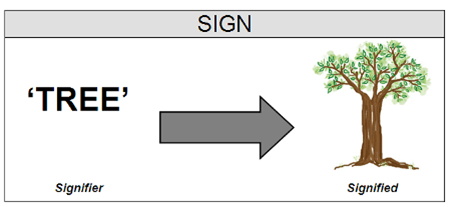
after that Ferdinand Saussure affirmed that language was made up of signs and
that every sign had two sides the Signifier and the signified that we can see
in the next example
Saussure
also said that Parole was regulated by the individual, whereas langue was
regulated by the group.
The view of language in modern linguistics
Language Varieties
 Linguists recognizes, and accepts without value judgement, the
existence of language varieties, such as regional dialects and social
dialects (or sociolects).
Linguists recognizes, and accepts without value judgement, the
existence of language varieties, such as regional dialects and social
dialects (or sociolects).
Nowadays, most of English classes teach just the most famous varieties of the language which are American and British ; however, the other types are not took into account; thereupon, it is important that classes promote this knowledge since these varieties are part of the learning of what the English culture involve. (Strevens 1977a).
Langue and Parole
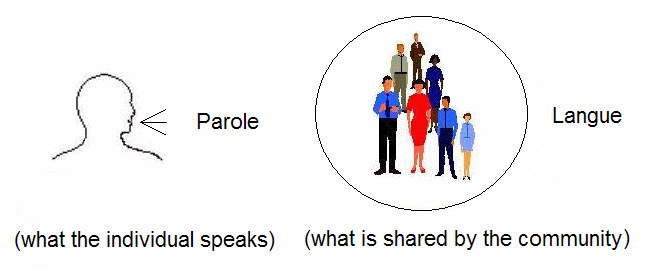 Langue: Is the language as a system or
structure
Langue: Is the language as a system or
structure
Parole: Is the use of the language in utterances,
Performance:Refers to the infinitely varied individual acts of verbal behaviour with their irregularities, inconsistencies, and errors.
Competence: Is the the capacity of the individual to abstract from these acts of performance and to develop system and order.
Aspect of language study
Phonology

The difference between phonetics and phonology is that, phonetics studies the articulatory and acoustic phenomena which make it possible to produce and perceive speech sounds. On the other hand, phonology, is a more strictly linguistic discipline which investigates the sound systems of particular languages and develops general principles applicable to the sound systems of all languages. Phonology is less concerned with the analysis of concrete and individual.
Phonetics can be considered as helpful to pronunciation teaching in that it provides the teacher with a diagnostic understanding of how speech sounds are produced. Phonology is needed to understand what constitutes the sound system of a particular language.
Grammar
Is the branch of the description of languages which accounts for the way in which words combine to form sentences’ (Lyons 1971:63). It is divided in morphology and syntax
Morphology studies the internal structure of the forms of words, while syntax is the study of sentence structure.
Lexicology
Is the study of lexis or vocabulary. For language instruction, lexicography, and other practical activities a systematic understanding of lexis is important, and the neglect is all the more curious and unjustified.
Directions in linguistics
Linguistics has advanced in two main directions. One is the detailed study of the different branches of specializations, for example, phonetics or syntax. The other is the study of language as a whole, the attempt to discover how the different parts of language interact and how the total language as a ‘system of systems’ can best be grasped.
Schools of thought
Bloomfield and American structuralism
Bloomfield’s predominant concern was to establish linguistics truly as a science of language. The task that he saw was needed was two fold: (a) to delimit the role of linguistics in relation to other sciences, and (b) to develop the principles and concepts of linguistics into a well balanced and unified structure.
Bloomfield wanted linguistics to become an empirical, descriptive science in these terms: ‘that science shall deal only with events that are accessible in their time and place to any and all observers (strict behaviorism)
Neo-Firthian theory
Halliday view that a
linguistic description is on three levels: substance (phonic or graphic),
form, and context. Three branches of linguistic study correspond to
these three levels: phonetics and phonology examine the phonic
substance (graphology the graphic); grammar and lexicology study , linguistic forms; and semantics studies the context which relates
linguistic form to non-linguistic events
Transformational generative grammar
The central figure in this approach is Noam Chomsky.
The primary purpose of transformational generative grammar was to investigate an area in which structural linguistics had hitherto made only limited progress, namely syntax. Structural linguistics had built up an impressive technical apparatus for the study of phonology and morphology, but its treatment of syntax was far less assured.
Language Varieties
Linguists recognizes, and accepts without value judgement, the
existence of language varieties, such as regional dialects and social
dialects (or sociolects).Nowadays, most of English classes teach just the most famous varieties of the language which are American and British ; however, the other types are not took into account; thereupon, it is important that classes promote this knowledge since these varieties are part of the learning of what the English culture involve. (Strevens 1977a).
Langue and Parole
Langue: Is the language as a system or
structureParole: Is the use of the language in utterances,
Performance:Refers to the infinitely varied individual acts of verbal behaviour with their irregularities, inconsistencies, and errors.
Competence: Is the the capacity of the individual to abstract from these acts of performance and to develop system and order.
Aspect of language study
Phonology
The difference between phonetics and phonology is that, phonetics studies the articulatory and acoustic phenomena which make it possible to produce and perceive speech sounds. On the other hand, phonology, is a more strictly linguistic discipline which investigates the sound systems of particular languages and develops general principles applicable to the sound systems of all languages. Phonology is less concerned with the analysis of concrete and individual.
Phonetics can be considered as helpful to pronunciation teaching in that it provides the teacher with a diagnostic understanding of how speech sounds are produced. Phonology is needed to understand what constitutes the sound system of a particular language.
Grammar
Is the branch of the description of languages which accounts for the way in which words combine to form sentences’ (Lyons 1971:63). It is divided in morphology and syntax
Morphology studies the internal structure of the forms of words, while syntax is the study of sentence structure.
Lexicology
Is the study of lexis or vocabulary. For language instruction, lexicography, and other practical activities a systematic understanding of lexis is important, and the neglect is all the more curious and unjustified.
Directions in linguistics
Linguistics has advanced in two main directions. One is the detailed study of the different branches of specializations, for example, phonetics or syntax. The other is the study of language as a whole, the attempt to discover how the different parts of language interact and how the total language as a ‘system of systems’ can best be grasped.
Schools of thought
Bloomfield and American structuralism
Bloomfield’s predominant concern was to establish linguistics truly as a science of language. The task that he saw was needed was two fold: (a) to delimit the role of linguistics in relation to other sciences, and (b) to develop the principles and concepts of linguistics into a well balanced and unified structure.
Bloomfield wanted linguistics to become an empirical, descriptive science in these terms: ‘that science shall deal only with events that are accessible in their time and place to any and all observers (strict behaviorism)
Neo-Firthian theory
Transformational generative grammar
The central figure in this approach is Noam Chomsky.
The primary purpose of transformational generative grammar was to investigate an area in which structural linguistics had hitherto made only limited progress, namely syntax. Structural linguistics had built up an impressive technical apparatus for the study of phonology and morphology, but its treatment of syntax was far less assured.
Wednesday, August 19, 2015
What is language?
Hello teacher, this blog is created by Sara Julieth Arbélaez, Andrea Marcela Berrio and Jaider Arley Ramírez. In this page we are going to share the knowledge we have learnt during the classes and readings.

In our first class, we made a discussion about language and code.
- Language: Is the system of words that people use to communicate. Exist two language's requirements, one of them is that it must be infinitely creative, it means that we can create an unlimited number of sentences just using a set of words (This is because language is creative). The other is Arbitrary creative, is the relationship between a vocal symbol (form) and the entity, event, state or action (meaning) of the vocal symbol can't be proved. (There is no connection between the sound and the message)

- Code: Is an organized system of signs. Also, are the rules about how you combine signs, how signs relate to each other (signs can be words or images, but also behaviors, or concepts such as metaphors.)
Before defining those concepts we had a discussion about if animals communication was a language or a code and each person had the opportunity to show their pont of view.
The conclusion of that debate was that animals communicate through a code because:
- They use signs, sounds, gestures and movements but those symbols never changed.
- They can't add or create new words or new phrases (which is a requirement to be a language)
- Animal communication is innate.
- Animal communication is not arbitrary because an animal's message and the sound can't be separate.
- All languages have rules that guide how we can combine some parts of language. However, animals can combine it in any order and it will still have the same meaning.
Subscribe to:
Comments (Atom)